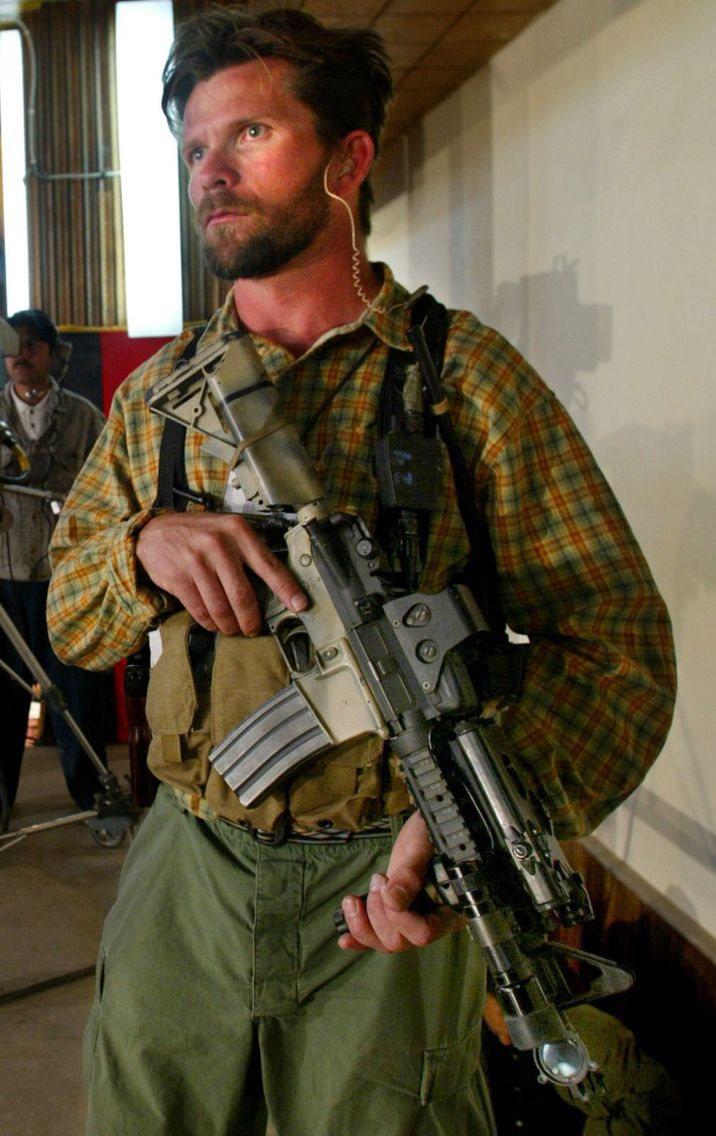
CQBR Block I
Development and Origins
The CQBR's roots trace back to the late 1990s, amid efforts to modernize AR-15/M16-style weapons for special forces. The broader SOPMOD program, initiated in September 1989 as the Special Operations Special Technology (SOST) Modular Close Combat Carbine Project, aimed to standardize accessory kits for M4A1 carbines using commercial off-the-shelf (COTS) and non-developmental items (NDI). By 1992, a Material Need Statement was signed, and an Operational Requirements Document was validated in 1993, with oversight handed to the Naval Surface Warfare Center Crane Division (NSWC-Crane).
Specifically, the CQBR was conceived in 1999 as a replacement upper receiver for the M4A1 carbine, addressing limitations of standard-length rifles in confined spaces. Developed by the U.S. Navy in collaboration with Colt Defense and Daniel Defense, it was initially proposed as one of two special mission receivers for inclusion in the SOPMOD Block II kit. However, it was ultimately removed from the SOPMOD program and pursued as an independent project by NSWC-Crane. The design drew from shortening existing M4A1 uppers, resulting in the CQBR Type 1—the foundational "Block 1" variant. Production began in 2000, with over 10,000 units manufactured to date. This version was essentially a cut-down M4A1, incorporating reliability tweaks for its shortened barrel, and it entered service that same year.
The CQBR Block 1's development was driven by the need for a "submachine gun-sized" weapon firing the 5.56×45mm NATO intermediate cartridge, bridging the gap between full-sized rifles and submachine guns like the MP5. It saw immediate deployment in the early stages of the War in Afghanistan (2001) and the Iraq War (2003), where its compact form proved invaluable for U.S. special operations units in door-to-door fighting and maritime interdictions.
Adoption and Operational Use
Adopted primarily by U.S. Naval Special Warfare (NSW) units like the Navy SEALs, the CQBR Block 1 quickly expanded to other elite forces. By 2006, the full rifle configuration—designated Mk 18 Mod 0—became standard issue for Visit, Board, Search, and Seizure (VBSS) missions, NCIS agents in combat zones, and U.S. Coast Guard Tactical Law Enforcement Teams. It was also issued to Marine Force Reconnaissance units, Marine Special Operations Command (MARSOC) Critical Skills Operators, and Navy Explosive Ordnance Disposal (EOD) teams.
The system's modularity, via the SOPMOD Block I kit, allowed operators to customize it for specific missions, such as attaching suppressors for stealth operations or grenade launchers for breaching. Its initial exclusivity to NSW and SOF units underscored its role in high-risk, low-signature engagements.
PARTS LIST
Lower Receiver
Lower Receiver: Colt A2 profile Lower w/ UID Label
Stocks: LMT Sopmod Gen 1/Gen 2, Colt CAR, Colt Waffle (Various Others)
Grip: Standard A2, Ergo (Various Others)
Trigger: Colt, Geissele SSA/SSA-E
Trigger Guard: GI
Rear Sling Mount: CQD
Upper Receiver
Upper Receiver: Colt AF/Keyhole/Square
Barrel: Colt 10.3” FSP w/ 0.070 gas port
Gas Block: Colt FSP
Muzzle Device: Knights Armament NT4 Flash Hider, BE Meyers 249F Flash Hider
Hand Guard: Knights Armament RAS
Bolt Carrier Group: Colt
Charging Handle: Standard GI, PRI Gas Buster Military Latch
Rear Sight: Lewis Machine and Tool Fixed Rear Sight, Matech, Knights Armament
Front Sight: Colt FSP
Optic: Aimpoint CompM2 w/ Wilcox Aimpoint Mount, Eotech 553/SU-231, Eotech EXPS3-0/SU-231a, Elcan SpecterDR 1-4/SU-230 FDE w/ L3 MRDS/Docter, Eotech G33 Anodized
Light: Surefire m951 “Fat Body”, Surefire M-Series (Various), Insight M3X FDE, Insight WMX200 Bronze Rotational/Fixed
Laser: PEQ-2A, Peq15/Atpial C, LA5, Peq16a/b
Suppressor: Knights NT4 Taupe/Black
Front Sling Mount: CQD
Foregrips: Knights Armament, Tango Down Fullsize, GripPod, (Various Others)